
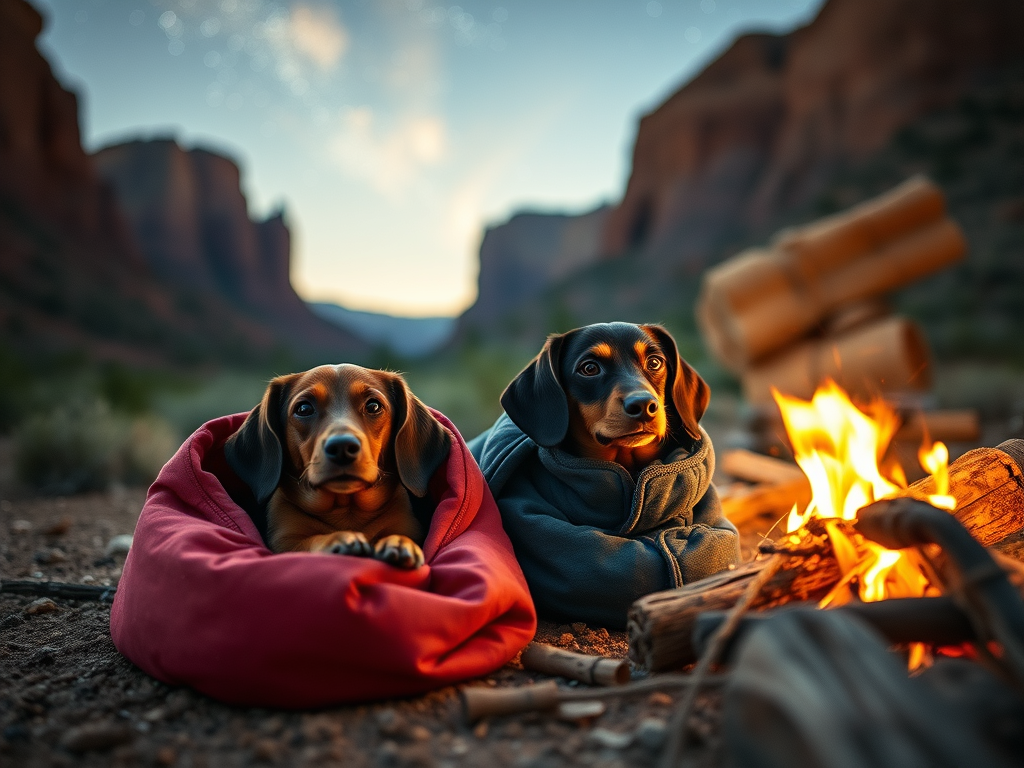
In 2021 I took my dogs camping on a road trip through Utah, Arizona, New Mexico, Colorado, and Wyoming. My two dachshunds, Chloe and Izzy, came along for the ride and we car camped and hiked. They are pretty active outdoor dogs, hiking and backpacking with me frequently, so camping with them is nothing new. However, there are a lot of logistics when it comes to camping with dogs that were even more pronounced as we spent three weeks on the road. Here I share lessons I’ve learned over the years of taking my dogs’ camping.

Dog Camping Basics
I have done plenty of car camping and backpacking with my dogs. Many things I discuss apply to both.
Dog Bedding for Camping
The dog bedding you pack for camping depends on:
- how cold it will be,
- how big your dog is,
- how much hair they have.
For example, if you have a Husky Malamute, you’re not going to need to pack much, even in the coldest conditions. They are built for snow. However, when it comes to my wiener dogs, they freeze in about anything. Therefore, I carry more bedding for them. Further, if you have a big, short-haired dog, whatever you pack will likely be bulkier and heavier than what I pack for my girls.
Sleeping Bags for Dogs
Sleeping bags for dogs may be the best way to go. I took an old mountaineering bag of my grandpas, cut it up, and made my dachshunds their own little bags. These are lightweight, packable, and they can burrow right into them. For bigger dogs, consider packing their own lightweight bag. After all, we barely fit in our own mummy bags, let alone having to share with our pups.
You can make bags with other material as well. For example, you can find fleece blankets for as cheap as $5 at Walmart or Amazon. Sew these into bags or bring them as is. They also give your dog an excellent, inexpensive place to lay while hanging out.

Blankets for Dogs
As stated above, the cheap fleece blankets make excellent dog blankets for both camping and everyday use. I usually carry a pile of them with me in the car for if we have accidents or need spares. The dogs like to lay on them on the ground when we are car camping or snuggle into them in the back of the truck at night.
Beds for Dogs
If you’re car camping, you can also just bring your dogs bed. And if you’re a dog owner, you know how beds accumulate at home! So take one and adopt it for camping so you don’t mind if it gets dirty. Pick one that is easily washable and you’re good to go.

Food for Camping with Dogs
No matter what kind of camping you’re doing, it’s essential to stick to your pet’s regular diet so as not to cause digestive upset. Take their typical food and treats and feed them at their normal times.
When I car camp, I take a small tote filled with food. I can put their bowls, leashes, medications, snacks, poop bags, and anything else on top of the food. It’s handy for taking out of the truck or even carrying into a motel room.
When backpacking, it’s a little different since you’re trying to save weight. If you have a big dog, you can get them a pack vest with pockets to carry their own food and gear. Of course, not all dogs will like them, so make sure you practice before hitting the trail for an overnighter. However, this isn’t always an option if you’re like me and have tiny dogs.
When it comes to taking food for my dogs (and when your dog is packing their own), it’s helpful to measure each portion for morning and night for the number of days they’ll be gone. Then, depending on how many miles you’ll be putting on, I add additional food accordingly. Your dog will need extra calories just like you when putting on lots of miles.
It’s always helpful to factor in treats for rewarding them when they’re a good dog!
What Else Should I Take For Dog Camping?
Besides bedding, food, and poop bags, there are some other items to consider for when you take your dogs camping.
Coats for Dogs
Not every dog has or needs a coat, but some do. If you have a short-haired dog, remember that nights spent outside can get chilly quickly. I know my girls love their coats, and it helps keep them more comfortable. They’re easy to throw in my rig or pack, and I’m always glad I have them when the dogs start shivering.
Additionally, they make raincoats for dogs. My girls don’t have raincoats, and I rarely take them when there is rain (I live in Montana, so it’s not like the Pacific Northwest). However, if your dog has one, consider packing it.

Boots for Dogs
If you’re taking your dog winter camping, consider whether or not they should have a pair of booties to keep their paws from getting cold and torn up. Not all dogs like them, and they’re challenging to get to work with short-legged dogs like mine. But, if you have them and it’s the season you need them, throw them in.
Medications
Just like you, if your dogs take medications, make sure you take them with you. Measure them out for the number of days you’ll be gone and throw them in your tote, pack, or your dog’s pack. They won’t weigh much but keep them on their routine. Additionally, if you have anything special for your dog, like pain meds, take some. My wiener dog, Chloe, has back issues, so I make sure to take her Tramadol just in case she gets sore.
Water Dish
Ensure you have a water dish in your car and carry extra water for your dogs. You never know where you’re going to end up, and you can’t guarantee there will be water readily available. Even backpacking, consider taking a collapsible dish. Sure, there may be natural water sources, but sometimes you can hike a lot of miles in-between, and your dog needs to stay hydrated, just like you.
Hunters Orange
While it may not be necessary for most places, most of the time, if you are going to be hiking or backpacking anywhere during a hunting season of any sort, make sure you and your dog have hunters orange. It will ensure you’re visible and not mistaken for the hunted wildlife.
Leashes
Whether it’s a retractable or fixed-length leash, make sure you have one with you at all times. Even if you’re in the backcountry and your dog is running free, you never know when there might be a situation that requires you to have complete control of your dog, or you need to tie them up to get them out of the way.
For example, you do not want them chasing wildlife. I’ve had the dogs attract coyotes into camp, and being that dogs aren’t always the most intelligent creatures around, it’s pretty easy for them to take off after them and get eaten. If you start having bear issues, the same thing. You also don’t want them harassing other people on the trail, so if you’re coming up on someone and you know they’ll want to go jump on them, put them on their leash, and get control of them.
If you carry paracord or other rope in your pack, this may work as well, double its use, and lighten your load.

Crates
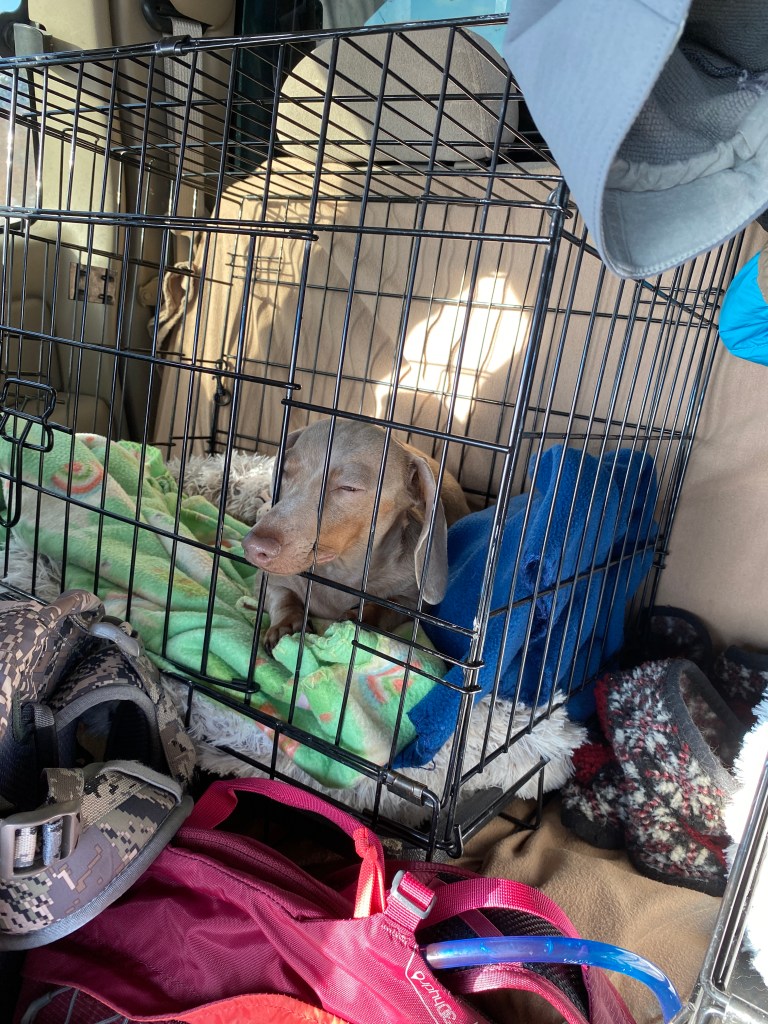
If you’re backpacking, this isn’t going to be an option. However, consider taking their crate with you if your dog is crate trained and you can fit it in your vehicle. This gives them a safe space to hide if they get scared or tired and keeps them safe while driving. I can easily put each of my dogs’ crates in the extended cab of my Chevy Silverado, and they sleep all day. Or, in the case of my little one, Izzy, she stares at me all day as I drive. Regardless, it makes travel a whole lot easier on us all.

Picking Up Dog Poop While Camping
Let’s face it, dealing with dog poop is one of the less appealing aspects of dog ownership. No matter which way you look at it, dog poop is disgusting. In my travels, both road tripping and camping, I am appalled at the number of people that don’t pick up after their pooch.
Additionally, dog poop can easily wash into streams and rivers, lakes and ponds, and storm drains (which run into those water sources), contaminating the water with E-coli and other diseases. Picking up your dog poop is not only about keeping people from stepping in it; it’s also about keeping the environment and ourselves healthy.
If you’re camping in a campground, hiking down a trail, dispersed camping, in a park, or somewhere else where there will be other people, find a way to get rid of your dog’s waste.
If you’re prepared, it doesn’t have to be that hard. There are a few different methods you can use.
Dog Waste Bags
You can buy inexpensive dog waste bags. Many of them are even scented to mask the doody smell. They’re light to carry, and you can throw an entire roll in your vehicle, your coat pocket, or your backpack. Turn the bag inside out, grab the poop, turn it back outside in, tie it up, and throw it away.
Recycled Dog Waste Bags
If you want to be a bit more eco-friendly, recycle! An empty bread bag or other plastic food bag makes an excellent poop picker-upper. Use it the same way you would the store-bought bags, and you’re good to go. Since you’ll probably be throwing the bag away anyway, at least you can do some good with it.
When do I not need to get rid of dog poop camping?
If you’re backpacking, hiking off-trail, recreating where not many people go and are in a pretty arid climate, you should use some common sense if you should or shouldn’t do something about your dog’s poop.
If there is a chance nobody will cross paths with it before it disintegrates, and it’s not going to run directly into a water body, you’re probably okay to leave it. If you’re hiking down a busy trail into the wilderness and it’s close to the path, consider throwing it further off-trail. And for crying out loud, if they poop in the trail, DON’T LEAVE IT THERE!
Bury Your Dogs Poop When Camping
Say you’re at a backcountry campsite. Other people will be there after you, but you also don’t want to pack your dog’s poop back out. Consider burying it as you would your own. This keeps others from stepping in it and helps follow Leave No Trace principles.
Other Needs When Camping with Dogs
Besides what to pack for your dog when camping, there are other things to make sure you think about when you’re recreating with your dog.
Paw Care
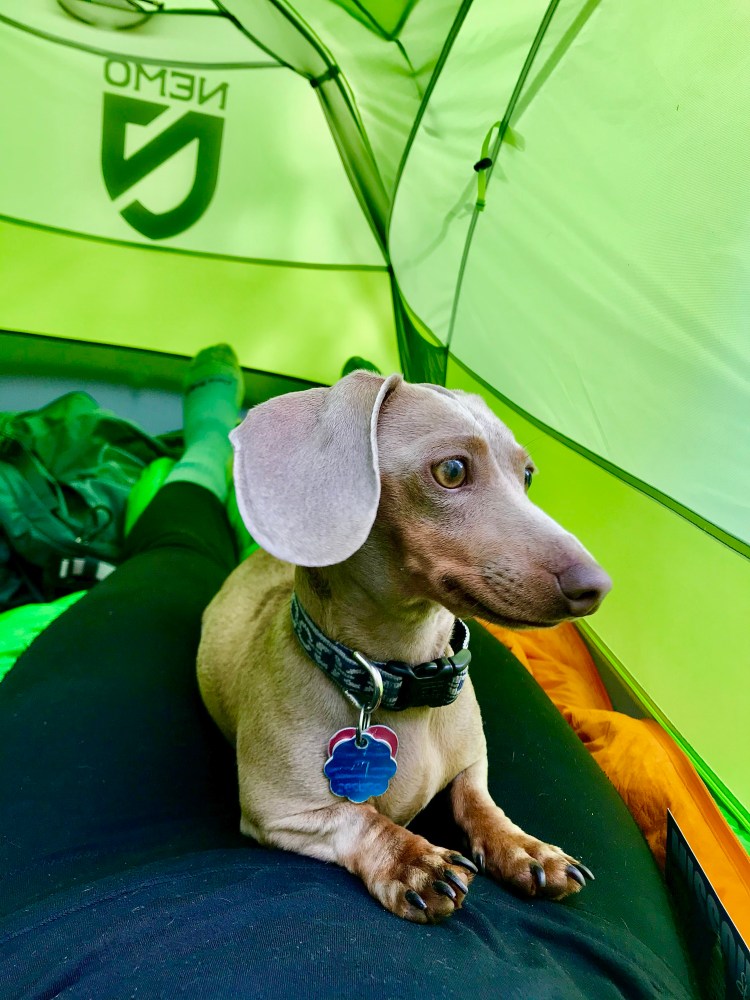
If you’re going to be hiking long miles, whether backpacking or just day hiking, pay attention to the trail composition and how likely it is to make their feet sore. For example, when down in Arizona, I went on a trail made of granite and rock. I had to pack my girls for a while to make sure we could make the entire round-trip. They did okay, but I kept checking them to ensure their paws weren’t starting to rub raw, which can and does happen.
Snow and ice can also be hard on a dog’s feet. As I said before, take booties if you think they will need them. This is especially important when it gets frigid, as their feet can begin to freeze and hurt quickly. Hopefully, if it’s that cold, you won’t be out in it at all, or at the very least, you’ll keep your dog home.
If you notice their feet get rubbed raw, make sure to clean them like you would your own wound, and put some medication or paw softener on them to keep them from drying out and cracking. Natural-based moisturizers containing lanolin or Vaseline, or coconut oil can do the trick. About anything you’d put on your own cracked hands or feet will probably work.
Also, have a contingency plan for if they get so sore that they can’t walk out independently. Have a way to carry them out if you need to. Depending on their size, there are several different methods, but do your research and know ahead of time which is best for you and your dog.
Know Your Dog’s Fitness Level
Just like you, make sure you know your dog’s fitness level and don’t ask them to do more than they are capable of. My little seven-pound three-year-old dachshund, Izzy, can go a lot further than my chubby 12-year old, Chloe. In that case, I have a contingency plan for packing Chloe when she gets tired, and I don’t go further than they are capable. Having been out on the trails with them a lot, I know when they start getting tired or sore and keep a close eye on them.
Hydration
As I mentioned before, your dog will need plenty of water. This applies whether you’re doing lots of hiking or just sitting at a campsite. It can be really easy to get to where you’re going, set up camp, and forget about making sure they have water. Trust me, I know, because I’ve done it more times than I care to count (or admit!).
Take a 5-gallon jug of water if you have room and a water bowl. As you’re unpacking and setting up camp, water them!
If you’re backpacking, stop at water crossings and make sure they drink.
Final Thoughts on Taking Your Dogs Camping
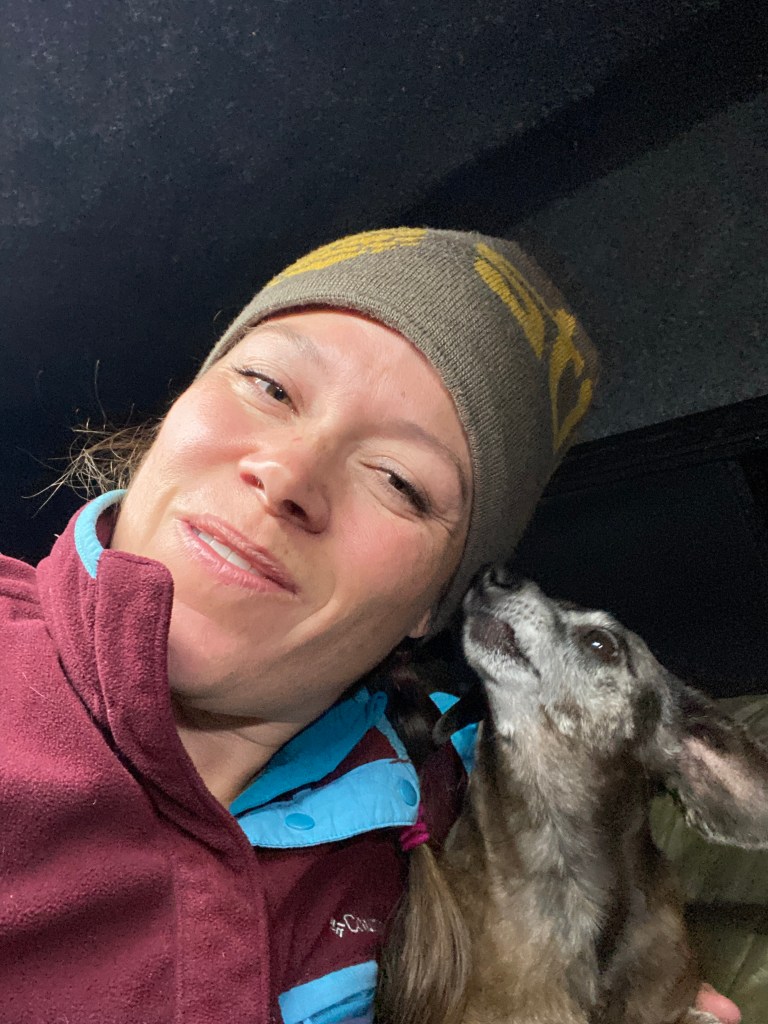
As you can see, camping with dogs requires some preparedness and forethought. However, it can also be a lot of fun. Who doesn’t love spending time with their dog, doing the things they love?
Getting in nature, breathing fresh air, and camping under the stars can be just the break we need from this fast-paced world we live. With enough planning, there is no reason your dog can’t join you.
Make sure you pack plenty of food, bedding to keep them warm, ways to water them, poop bags, leash, and all the other miscellaneous items I listed. This way, you know they’ll be comfortable, and you can have a stress-free trip.
 Public Relations