

Whether you need an ultralight backpacking tent or something to fit the entire family, choosing the right camping tent is essential. A good tent protects you from the elements and gives you privacy. Tents come with many features and in lots of sizes and materials. Choosing a tent can be overwhelming whether you’re familiar with camping or are just beginning. But rest assured, armed with some tent basics and an understanding of what to look for, you’ll be sitting around a campfire and sleeping under the stars in no time.
What Kind of Tent Do I Need?
You need to know what kind of camping you’ll do to understand what tent to buy. Are you planning on driving to your camp spot and camping from your vehicle? Or perhaps you want to backpack far into the backcountry with your gear on your back. Others may pack with horses and mules or raft to their campsites. Knowing how you’ll get your tent to your campsite will dictate the type of tent you buy. The weather and conditions you’ll camp in will also determine your tent. Some materials are designed to keep you warmer, for use with stoves, or are better in windy weather.
Types of Tents
First, it’s important to know there are many different types of camping tents. You’ll want to ensure you understand the differences to determine which is best suited for your needs.
Camping Tents
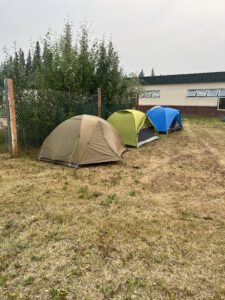
I use this category to broadly categorize the most common camping tent. Camping tents come in many sizes and are usually made of nylon or polyester. These tents are suitable for car camping at campgrounds or dispersed camping. While the price range runs from cheap to more expensive, these will typically be affordable tents, ideal for people just getting started. However, you can find larger tents in higher quality materials that can get quite pricey.
Backpacking Tents
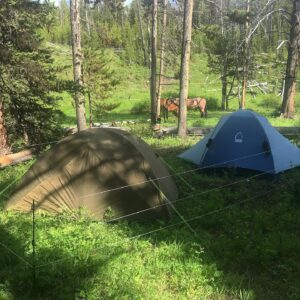
Backpacking tents differ from camping tents in that they must be lightweight enough to carry in a backpack for long distances, along with all your other gear. While what people deem “lightweight” may vary per individual, any camping tent weighing less than seven pounds could be considered a backpacking tent. However, less weight is better for backpacking, and seven may be a bit heavy. These tents are usually one, two, or three-person tents, although some ultra-lightweight four-person tents may fall into this weight range. The materials will likely weigh less, and the high end of these tents can be expensive.
Wall Tents
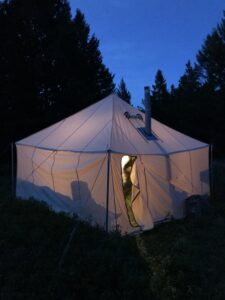
Wall tents are good camping tents for cold weather and are often used by outfitters or hunters. These tents are also suitable for glamping. They are usually made of canvas or a canvas blend and often come with a stove jack to use with a wood stove. Wall tents are heavy and often set up at trailheads or where horses or mules can haul them. They are too heavy for backpacking. An additional cover can be added over a wall tent to create an insulation layer and keep water and snow from seeping in wet weather.
Truck Tents
Camping tents for trucks are designed to attach either to the top of a vehicle roof or off the side. These tents easily pop up and allow you to camp on your vehicle. When driving, they collapse down. These are not designed to stand alone and do require installation. Truck tents are suitable for road-tripping or anywhere you’ll be camping with your vehicle.
Teepee Tents
Teepee tents are easy to set up and save weight due to the configuration. They often have a center pole holding the middle up, and the fabric is staked to the ground in a circle around it. Teepee tents can come in the same canvas material as a wall tent or ultralight material for backpacking. There are even ultra-lightweight backpacking stoves made these days to go with these lightweight teepee tents, suitable for four-season backpacking. The downside to these tents is they are less spacious since the roofline slopes straight to the ground at an angle, and there aren’t walls.
Tent Materials
Tents come in many types of materials. Which is used depends on the kind of tent and what it will be used for. Tent materials run the gamut from ultra lightweight to heavy and cheap to expensive. Rest assured; there is something to fit your needs and budget.
Polyester Tents
Polyester is one of the most common and popular tent materials. It is a petroleum derivative and is strong and affordable. This is a high-density fabric designed to handle lots of camping conditions. Additionally, polyester is easy to repair. Polyester tents are much lighter than canvas tents but won’t be as ultralight as some ripstop nylon. It’s used for many camping tents but often isn’t light enough for backpacking. Polyester can have a smell when new.
Nylon Tents
Nylon is the lightest weight material used for making tents and is popular with backpackers. However, nylon must be treated to be waterproof and keep out moisture and avoid sun degradation. While high-end nylon is good for tents, cheap nylon can quickly leave you drenched in a rainstorm. In this case, you get what you pay for, and spending the extra money is essential for a higher-quality tent. Look for a ripstop pattern for added strength. It will add some cost but will last longer in the long run.
Cotton Canvas Tents
Cotton canvas was an original tent material and is often specially treated to repel water and snow. The canvas is heavy, durable, and excellent for cold-weather wall or teepee tents. It is too heavy for backpacking tents but comes in several different weights depending on your needs. Canvas tents are often large and specially ordered with many features, making them quite expensive. Again, they’re great for outfitters or people wanting a semi-permanent setup to accommodate multiple people.
PVC (Poly Vinyl Chloride) Tents
PVC tent fabric is specially treated polyester or canvas fabric. It is heavy and resembles plastic or acrylic. Tents made from this fabric often have stove jacks and are pretty large. They are more commonly used for events or wildfire camps rather than camping. PVC material doesn’t breathe well, so it must come with vents or windows. However, it does keep these tents quite warm.

Poly-Cotton Tents
Poly-cotton fabric is cotton canvas with polyester woven in. It’s breathable, lighter in weight than canvas, and more mold resistant. However, it’s still too heavy for backpacking tents. It’s used in styles like wall and teepee tents to save weight for horse packing. It is more expensive than nylon and polyester camping and backpacking tents.
What Size Camping Tent Should I Get?
Camping tents commonly come in one, two, three, four, five, six, and eight-person tents. The larger capacity, the heavier the tent. Backpackers prefer smaller tents due to weight constraints, while families may prefer larger tents with more space.
A good rule of thumb is to go up a size from how many people will use the tent. For example, consider a three-person tent if two people share a backpacking tent. The reason is that you’ll also have gear and perhaps a dog sharing your tent and will welcome the extra space. Likewise, an eight-person tent may make more sense for a family of four.
Camping Tent Features
Finally, tents have many features to consider. Not all features will be found on all tents. However, it’s good to understand what each does and why you may or may not need it.
Rain Fly
The rain fly is a piece of fabric, separate from the tent itself, that goes over the tent to keep rain, snow, and wind out. It also adds a layer of insulation. Rain flies are an essential feature, designed to keep you dry. Most tents come with rain flies, although some, like wall tents, do not (although they can be purchased separately). However, a tarp can work in an instant.
Tent Design
The way a tent is sewn can impact its use and functionality. For example, if the floor and wall meet at the ground, the seam can be a weak spot, quickly allowing in standing water. In contrast, the floor sewn higher on the wall keeps it off the ground and away from water. Sure, the seam is still there, but if water gets that high to seep into the seam, you’ve got more significant problems.
Footprint Tarp
A footprint tarp is staked to the ground under a tent to protect it from sharp rocks and sticks and to keep additional moisture out. Usually, they are designed to match the footprint of a particular tent. These are optional but can protect your investment. Wall tents don’t always have a floor, but a tarp can be added to help keep out bugs and critters.
Guy Lines
Most tents have guy lines, from camping tents to wall tents. These are ropes or strings attached to the outside of the tent walls and staked outward from the tent. The purpose is to help stabilize the tent in the wind and stormy weather. Guy lines increase the odds of keeping your tent standing. Most tents that need guy lines already have them installed. If they don’t, consider the quality of the tent you’re considering.

Windows and Doors
All tents have doors (how else do you get in?), and many have windows. Usually, doors and windows have two layers, so the bugs are kept out even if you open one up for venting. The bottom layer is often mesh, while the top layer is a piece of solid fabric.
While most tents only have one door, some have two (consider my favorite backpacking tent). This can be functional for ease of ingress and egress, especially in a small tent with more than one person. However, one door will suffice, if not less convenient.
Windows in wall tents are often add-ons that cost extra but are recommended. Since wall tents are usually used with a wood stove, it can sometimes get too hot, and ventilation is welcome. Having a way to regulate heat is handy.
Stove Jack
A stove jack is necessary when using a stove, and not all tents have one. These are most common in wall or teepee tents. The stove jack is a hole in the roof lined with heat and fireproof fabric. The chimney pipe is run through this hole to vent the smoke outside the tent, like a house chimney. Stove jacks prevents the tent fabric from melting and burning as the stovepipe gets hot. Some lightweight nylon backpacking tents come with stove jacks for use with ultra-lightweight stoves, but most camping and backpacking tents do not have them.

Stove Mat/Tent Shield
A stove mat or tent shield may be an optional purchase if you use a camping tent with a wood stove. The purpose is to keep the heat from the stove from melting or burning the tent floor or walls. Whether or not it’s needed will depend on how close to the wall the stove sits and the type of fabric the tent is made of.
Snow Skirt/Sod Cloth
A snow skirt or sod cloth is sewn to the bottom of a tent wall and extends several inches. These can be tucked in or out. They are used to keep out rain, snow, and wind. If you keep them tucked out, snow can stack on them and hold the tent down better. Or pile dirt on them to serve the same purpose. These are typically found in wall tents.
Final Thoughts
Choosing the right camping tent will ensure you have a great time outdoors. Consider the type of camping you’ll be doing and the number of people you’ll need to accommodate. Buy a tent that fits your budget, but ensure you’re not skimping on materials or features. A fast way to ruin a camping trip is to get soaking wet in a rainstorm due to cheap fabric.
Camping tents come in many shapes and sizes. Ensure you have plenty of space for everyone, your gear, equipment, and dogs. What size camping tent you buy is especially important if you end up sheltering together in the tent from a passing storm. From camping tents, 4-person to a 2-person backpacking tent, to an 8-person wall tent, there is a size for everyone.
Now that you know what type and size tent you’ll need, it’s time to go shopping! Make sure to check out my personal favorite, the Nemo Dagger OSMO backpacking tent. I also use a Kelty 4-Person tent for wildland fire camp, giving me plenty of space for a cot and all my gear on two-week assignments.
 Public Relations